Anglophone histories of the novel often note that a separation of literary value from entertainment value takes place around the advent of modernism. In contrast to the social content that drives Victorian narrative fiction, style becomes the subject of the modernist novel, whose impulse towards formal innovation – making it new – occludes prior conventions and codes of meaning. The sentence becomes an aesthetic object in its own right and detaches itself from overarching plot structures, taking on new intensities, sensations, and affects. For some critics, the fragmentation within the novel registers and responds to both the division of labor, which breaks down the human body as a perceptual unit, and to colonization, whereby the content of imperial wealth in the metropole is produced elsewhere, in the periphery. The meaning of daily life in London is to be found in Jamaica.
In The Politics of Style, Daniel Hartley teases that the opposition between the ‘plotless art’ novel and the ‘artless entertainment’ novel reaches its apotheosis in the work of John Banville, a much-admired prose stylist who has created an alter-ego, Benjamin Black, as a vehicle through which to publish his crime fiction. Whilst the distinction between high literary style and low genre pleasure might well be part of modernist lore, the tension between prestige novels and commercial thrillers not only continues to structure debates around the popularity of genre and its others but also precedes modernism too. Herman Melville’s Redburn (1849), for example, scans like a commodity produced for a mass market; a novel, however, that with oblique references to Nantucket whalers, is shadowed by Moby Dick (1851).
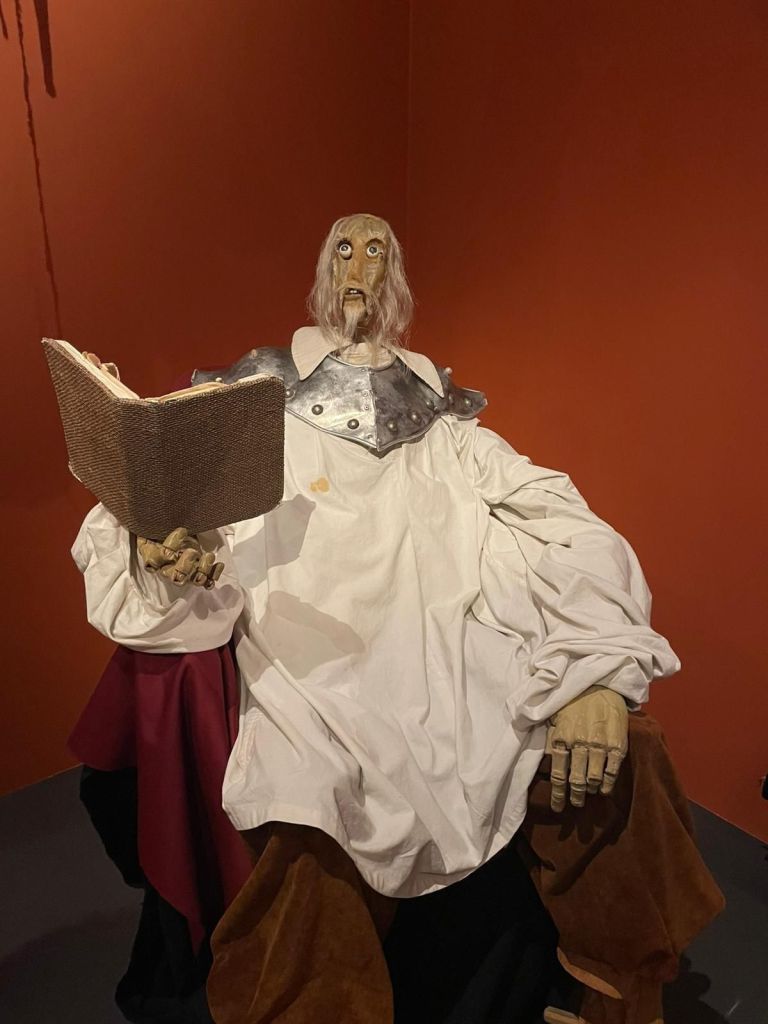
In contrast to Moby Dick’s status as a crazed epic of American literature, Redburn is a modestly conventional story of the titular character, Wellingborough Redburn’s first voyage across the Atlantic, from New York to Liverpool. A first-person retrospective account, Redburn combines elements of nautical fiction and travel narratives, as well as the Bildungsroman, sketching an at times humiliating initiation into the ways of the world for young Wellingborough. With its emphasis on education, Redburn belongs to a tradition within the novel which self-consciously reflects on the relationship between the imagination and reality, between mental models of order and their contact with bodily experiences – the disenchantment and secularization of fancy. In this regard, Wellingborough Redburn is an exemplary quixotic figure, one whose youthfully naive ‘inland imagination’ is predisposed to fantasies, reveries, and dreams of life at sea. Redburn notes that newspaper advertisements of shipping berths ‘possessed a strange romantic charm’, words which ‘suggested volumes of thought’. Such listings capture Redburn’s attention and set his imagination ‘roving’ in part because of the memories of objects and tales brought back by sea-faring relatives, whose adventures influence his expectation that he will also make his fortune at sea, both financially and symbolically. What Redburn encounters on the high seas; however, is not the world of romance but the brute realities of labor.
The first part of the novel details the voyage out and is preoccupied with Redburn’s interactions with the multitude, the sailors whose comportment both appalls and fascinates him. Much of the comedy here is derived from the process of decoding whereby the associative images of otherness that had formerly informed Redburn’s conception of maritime existence are replaced by the practical content and knowledge expected of crew members. On account of Redburn’s willingness and curiosity, what emerges is a sort of ethnography of the decks, one which takes pleasure in sequencing the duties that need to be performed and the peculiar language that structures speech and verbal exchanges. The novel is composed of phrases and gestures that puzzle and mystify Redburn: ‘turned in a dead-eye’, ‘clapt a seizing in the main-stay’, ‘passing a gammoning’, ‘reeving a Burton’, ‘strapping a shoe-block’, ‘clearing a foul hawse’. Redburn is impressed by the ‘versatility of talent’ displayed by crew members, by their generic capacity to take on other capacities: ‘a sailor must understand much of other avocations’. In an industrializing world where workers are increasingly specialized and disciplined to a single repetitive task, the ‘sailor-man’ constitutes a figure of mastery, a meta-worker who overcomes professional and industrial boundaries, an ‘artist’ rather than a mechanized body.
Few of the sailors are individuated in the novel. Those who warrant a name only do so through their personal relation to Redburn, as either mentors or tormentors. What the novel impresses quite powerfully is the presence of a collective assemblage of brains and muscles, of the sinewy synchronization of tasks, the collaborative performance of techniques. Yet this high regard for the collective intelligence of the multitude is sharply contrasted with the despair felt towards their conduct on shore, which is characterized by recklessness, sensuality, ignorance, and depravity. Sympathetic to reformist (and abolitionist) ideals, Redburn is troubled by a point of stress between the popular opinion of sailors and the strategic position they occupy within global trade networks. Among ‘the better classes of people’, sailors are shunned as outcasts and are believed to originate from ‘the refuse and offscourings of the earth’, an abject faction of humanity who cannot be redeemed. The revulsion with which the bourgeoisie, who are ‘passengers’, view the all too earthy mariners belies their pivotal role within the processes of economic globalization: sailors ‘are the primum mobile of all commerce’, the workers who facilitate the movements of the world market. In a prophetic vision of class exodus, Redburn worries that if sailors were ‘to emigrate in a body to man the navies of the moon, almost everything would stop here on earth’. Desertion and the arrest of motion are well understood to precipitate a crisis for capital.
If an interruption to the circulation of commodities has the potential to induce a spatial crisis of capital, the temporal form of perpetual motion is identified as one of its most potent revolutionizing forces. Redburn shifts from a narrative immersed in the collective powers making the modern world flow, to one invested in tracking the perceptual and cognitive experiences of that world once the crew has docked in Liverpool. As one of the key nodal points of the British Empire, the bodily sensorium is exposed not only to technological breakthroughs but also to the vast diversity of people and goods who effectuate the worlding of the market.
The maelstrom of modernity into which Redburn is flung is amplified and rendered comic through his bafflement that an ornate guidebook inherited from his father is unable to help him trace a cognitive map of Liverpool. Exasperated by the disorienting non-coincidence between the illustrated printed text and urban setting, Redburn comments that ‘this world […] is a moving world; its Riddough Hotels are forever being pulled down; it never stands still; its sands are forever shifting’. For Redburn, this incessant change is experienced as a profound sadness, that a treasured heirloom which had laminated his path to his father’s life is useless, that the sights which had affected his father are now inaccessible to Redburn. If the fantasy of life at sea is annulled through part one’s engagement with labor, part two emphasizes the transitory and fleeting quality of the modern. What is expressed through a comedy of misapprehension and dis-alignment is the recognition that a fundamental rupture with the past has taken place, a temporality whose composition within the present is diminishing.
The modern as it manifests itself in Redburn is a temporal form of being that dissolves generational ties and dissociates subjects from history. Modernity erases the traces of the recent past, which is perceived to have a closer relationship to remote antiquity than retain any degree of influence on the present. For Redburn, this is conceptualized as a loss of social and experiential legibility: ‘as your father’s guide-book is no guide for you, neither would yours […] be a true guide to those who come after’. In this regard, the guide-book as a genre and commodity embraces the dialectic of novelty and obsolescence which drives the search for new content and makes them the ‘least reliable books in all literature’. At the same time, as a technology of attention and tertiary retention, guide-books stand in allegorically for ‘nearly all literature’, which ‘is made up of guide-books’. For Yves Citton, the stories which percolate through the culture industry and media institutions act as prompters, they stimulate action, trigger reactions, drive responses, and, in doing so, ‘produce a certain sequence of actions in the reality to come’. Redburn likewise believes that guide-books ‘conduct’ their readers’ behaviors, shape their expectations, and nudge them along certain paths and passageways. The soft power of literature, in Citton’s view, lies precisely in its potential to meta-conduct the conduct of others, to guide and script their future actions from the imaginary sequencing of events within a narrative. Gestures and interpretations encountered in literary and cinematic texts train and modify the ways in which their consumers engage and interact with the worlds in which they find themselves immersed.
Yet if all literature is potentially consigned to arcane curiosity once its immediate age of production has passed, what, if anything, can be salvaged from Redburn itself as a guide for twenty-first century readers? The return voyage, which constitutes a code to the novel, highlights the exploitation of migrant workers, who are trafficked across the Atlantic in deplorable conditions. When a virus hits The Highlander, the steerage passengers erect barricades in defiance of the captain’s orders and successfully pressure the crew into disobeying commands to dismantle the barricades. A microcosm of the modern, the crew is an ephemeral assemblage, one that, once docked in New York harbor performs a final act of insubordination before disbanding and fleeing the disciplinary command of capital, if only temporarily. Solidarity and refusal combine in here and perhaps gesture to a micropolitics of saying no, constituting collectives within and against the imaginary orders that divide workers. Perhaps the challenges sets for us is to discover the grammars and arrangements of bodies and minds that can extend these fleeting moments of stoppage into an enduring and generalized crisis of reproduction, one from which the world might differ differently.

