
Histories of Capital
This project examines how contemporary historical novels have re-narrated transformations within the categories and conditions of labour across the capitalist world-system. Drawing on Georg Lukács’s claim that the central task of the genre is the invention of the people, the project questions why twenty-first century novelists have once again turned to the panoramic forms of historical fiction. In a departure from Lukács, such novels are concerned less with the establishment of the nation-state and more with bifurcations within humanity, divisions they link to the production of classed, gendered, and racialised subjectivities. Through theoretically informed close textual analysis, the project addresses how these productive subjects are both made by capital but also unmake and refuse political and economic subjection. In doing so, the project charts the destiny of the people as it is reimagined in contemporary historical novels, from the late eighteenth century to the far futures of science fiction. (No longer active)
Spaces of Capital
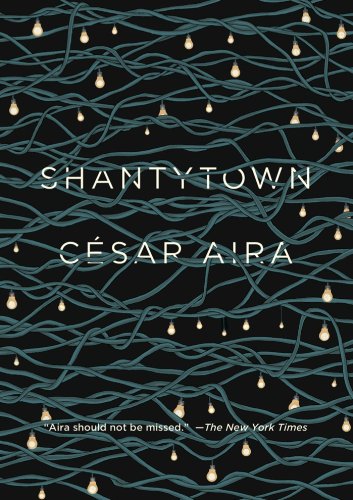
This project considers how literary form has responded to the immiserating tendencies immanent to capital accumulation, focusing in particular on ‘a proletariat without factories, workshops and work, and without bosses’, as Patrick Chamoiseau puts it, a proletariat ‘drowning in survival and leading an existence through embers’. Ranging across the work of Chamoiseau, César Aira, Hwang Sok-yong, Fernanda Melchor, and William Gibson, the project questions how late twentieth and early twenty-first century novels have chronicled what Mike Davis calls the ‘planet of slums’, mapping a condition in which labour is simultaneously excluded from waged work but trapped within a market economy. (No longer active)
The Refusal and Remythologisation of Labour: Outlaw Accumulation
According to Ricardo Piglia, money has some claim to the title of greatest narrator in world literature. On the one hand, for those who possess money, the story of its original appropriation must be dissimulated and cleansed of its bloody history. On the other, for those who lack it, money becomes a medium through which to dream and is identified as the means through freedom can be secured. To acquire expressivity, however, money cannot be earned through wage labour – which only reproduces situations of precarity and servitude – but must be made or, better yet, invented by forms of imaginary labour. Creative acts like counterfeiting, forgery, and confidence tricks, set out to emancipate proletarians – by means of the imagination – from their real conditions of destitution. This project is interested in how such imaginary labour both refuses the compulsion to work and, through its virtuosity, remythologises labour’s productive capacities.
 Thomas Travers