Reflections on Political Formalism in Hwang Sok-yong’s At Dusk and Ricardo Piglia’s The Way Out
In the Name of Conrad
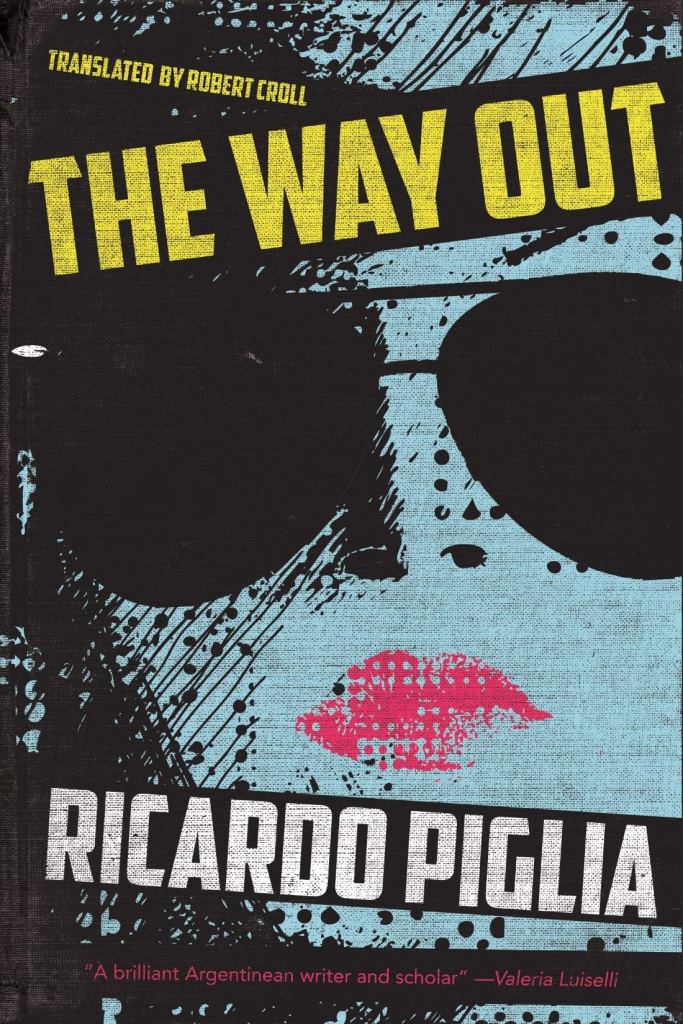
For Kim Minwoo, the way out of the infinite reconstitution of evermore intensive capitalist social relations is death: one he embarks on with others, who end their worlds together, a faint if unsettling vision of utopian collectivity. Ricardo Piglia’s zany campus novel The Way Out also searches for an exit from the cosmologies of capital, which ‘has managed – like God – to impose a belief in its omnipotence and eternality’.41 ‘Capital’s immanentisation’, as Kornbluh puts it, is contested in The Way Out through an effort to institute a new myth of class struggle: ‘we, like Prometheus, are prepared to accept the challenge and attack the sun’, declares a group calling itself ‘Freedom Club’.42 Freedom Club are in particular concerned with the technological expansion that has enabled capital to overcome all ‘biological’, ‘ethical’, ‘economic’, and ‘social’ limits to accumulation.43 As they warn in their incendiary manifesto on techno-capitalism: ‘the magnitude of development has been so great that it has radically affected our emotional certainties, and today society confronts its final frontier: its border – its no-man’s-land … the “psychological frontier”’.44 In order to shatter the passive joys of technologically induced addiction, Freedom Club – or their leading theorist, ‘Recycler’ – launches a lethal mail bomb campaign, not against the capitalist proprietors, but against their scientific researchers, the knowledge workers who are complicit with this reshaping of social and personal relations. Set in the mid-1990s, The Way Out initially appears to belong to a genre Alex Manshel has called the ‘recent historical novel’: the reclusive, neo-luddite ‘Recycler’ bears more than a passing resemblance to the Unabomber.45 However, by replacing the historical Theodore Kaczyinski with the novel’s fictional mathematics virtuoso Thomas Munk, The Way Out breaks the historical novel’s referential pact and opens the text onto something different: a consideration of novels and their readers, especially those who read ‘hypnotically’ and set out to experience plots for themselves.46
Literature, The Way Out speculates, establishes a rift with the present constitution of social relations and allows its readers to dissociate themselves from the structural determination of history. Although organised around an ideological defence of nature, the novel’s narrator, Emilio Renzi, nonetheless believes that Thomas Munk’s actions, path, and character are drawn from literary models. Munk, Renzi sketches, is ‘a reader of novels who seeks meaning in literature and then enacts it in his own life’.47 ‘Bovarism’, Renzi continues, ‘was the term for the power humans have to conceive of themselves as something other than [what] they are and create for themselves an imaginary personality’.48 For Jacques Rancière, Emma Bovary’s ‘enterprise’ is an important episode in the ‘literary revolution’, as Emma breaks with her hierarchically assigned social identity and engages with new capacities and forms of life.49 In Rancière’s account of modern literature, Emma Bovary’s ‘operations of disidentification’ are consonant with the nineteenth century emancipation movements, whose agents similarly searched for ‘another life’.50 By the mid-1990s, Bovarism perhaps relates less to an ascendant workers’ movement and more to a rear-guard effort to sustain the possibility of an antagonistic heterogeneity: ‘in a society that controls the imaginary and imposes the criteria of reality as a norm, Bovarism must proliferate in order to strengthen humanity and safeguard its illusions’.51
A politics of the imagination is an important aspect of the work of French philosopher and literary theorist Yves Citton. Citton refers to the structural coding of individual desire through institutionally contoured narratives as ‘mythocracy’. As Jason Read helpfully glosses, the concept of mythocracy contains three related concerns: one, it engages with ‘a politics that acts in and on beliefs, ideas, and thoughts’; two, that the control of minds is related to a ‘politics of attention’, which itself presupposes an ‘economy of affects’; and finally, that personal striving ‘is fundamentally structured and structuring in myth and narrative’.52 In other words, ‘narrative orients our desire’, but does so only if it has first ‘captured our attention’. The ‘stories and narratives that drive and motivate us’, Read summarizes, ‘are both the cause and effect of our desire’.53 The Way Out considers the consequences for a nation that has ‘made its flag out of individualism’ and which structures desires, affects, and action around the gendered myth of the ‘self-made man’.54 On the one hand, in the absence of stories which could otherwise channel fears towards forms of collective solidarity, rebellions against the daily injustices of US society tend to embrace acts of erratic ‘private political violence’ – the abject employee who shoots up, rather than organizes, their workplace.55 On the other, as the media coverage around Munk’s trial exemplifies, protests against the regnant American Dream are subjectivized and interpreted as ‘aberrations of personality’.56 Situations of subjection, then, are reproduced through the lack of institutional counter-inscriptions and the intense pathologisation of dissent into the psychic breakdown of damaged and isolated individuals.
Subjection is rarely complete, however, and the political task for the imagination is not only to interrupt the dominant myths but also ‘reconstruct them, bringing them closer in line with the causal conditions for transforming our existence’.57 Contesting the symbolic investments that affectively reproduce the material conditions of existence is crucial for a novel that Renzi believes to be significant to Thomas Munk: Joseph Conrad’s anarcho-thriller, The Secret Agent. In Conrad’s novel, as Renzi interprets a colleague’s annotations, a plot to blow up Greenwich Mean Time and ‘awaken the downtrodden and exploited’ becomes secondary to the story of the ‘Professor’, a gifted intellectual who eschews a career in academia and commits himself to anarchism and its propaganda of the deed.58 Munk similarly believes lethal operations will institute their own myths, resonating with the isolation of political radicals in a period of ‘defeat and decline’:
Now we have to start over again, we’re in the era of lone men, private conspiracies, solitary action … We are scattered individuals, off in the woods, lost in the big cities, subjects in flight and adrift on the prairies. We are isolated but we are many … United in dispersion, unknown to each other, these groups in fusion are constantly changing: in direction, in dimensions, in territory, in velocity.59
Invisible and fragmented, Munk strives to reorganise capital’s discontents under the command of literature or, more accurately, in the name of Conrad.
Munk not only takes inspiration from Conrad’s novels but reads them ‘seriously’, discovering in Conrad’s fiction an economy of gestures through which he can activate and action his own indignation.60 As Renzi stresses: ‘in the wasteland of the contemporary world, without illusions or hopes, and where there are no longer powerful social fictions or alternatives to the status quo, he – like Alonso Quijano – had chosen to believe in fiction’.61 Fiction enables Munk to immerse himself in radical discontinuities, changing his identity and becoming a ‘man of action’ – an insurgent in an apparently solitary war against US techno-capitalism.62 Alongside the disintegration of revolutionary and social-democratic parties and institutions, The Way Out suggests that the other powerful social fictions of the industrial era, the ‘adventurer’ – who ‘expects everything from action’ – and the ‘dandy’ – ‘who lives life as an art form’ – have also vanished.63 At the same time, Munk arguably synthesises the contradictions between romance and modernism, producing the new figure of the terrorist, someone for whom words and bombs prove reversible. Munk thus adopts actions and gestures from literature and transforms them into the basis through which a new myth of anti-capitalist struggle can be structured and the attention of an ‘invisible army’ captured and instantiated in covert missions that tilt at the sun.64
Arguing against critical practices that reduce literary form to a ‘determined reflection’ of historical conditions, Kornbluh insists that ‘novels know that the worlds they build are artificial, artifacted, designed’.65 Indeed, it is the very contingency of their aesthetic patterning of relations which establishes novels’ political formalism, their fierce awareness that all worlds are ungrounded and shaped by antagonism. Like Kornbluh, Thomas Munk identifies the possibilities and affinities between mathematical formalism and literature. A recipient of the prestigious Fields Medal, Munk connects his innovative work on logical choice to fiction: ‘it was about experimenting with possible lives and fictional lives. In both cases, we’re immersed in a world that is like the real world, immersed as if we are in the real world. The key is that fictional universes – in contrast to possible worlds – are incomplete’.66 If fictional worlds model alternative social arrangements their constitutive incompleteness also contains a spur to action. For Renzi it becomes clear that ‘Munk had set out to politically complete certain unresolved plots and to act accordingly’.67 Literature’s rupture with the world, then, offers not only a resource of hope – outlining permutations and variations on the present constitution of social relations – but also instantiates a bridge across which myth – as structured thought – can be reconnected with action. In The Way Out, narrative politics relates both to the dominant structuring of myth – the stories which set what counts as realistic and enforce that realism – but also to an eccentric politics of narrative, whereby the failures of literary heroes can be corrected in actuality. Preferring ‘to work from an existing plot’, Munk transforms the literary archive into a store of latent myths whose enactment could help shatter the calamitous impasses of the present.68
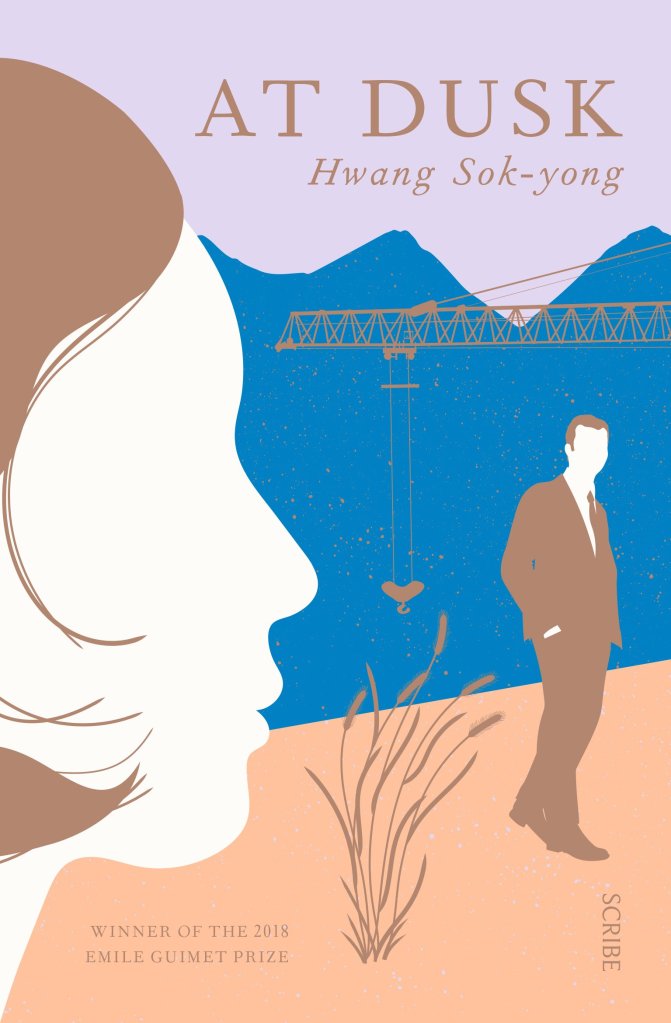
For too long, Kornbluh concludes, literary critics have been content to indict ‘art’s complicities’, rather than elaborate ‘its moxie’.69 Instead of positioning themselves as the wreckers of constituted power, literary critics ‘can be ambassadors for architecture, advocates and strategists for building, for operationalising off-page all the world-making of on-page models’.70 This article has sought to adopt Kornbluh’s exhilarating renewal of literary scholarship under the imperative to create and has considered the worlds modelled in At Dusk and The Way Out. As a central motif, At Dusk’s elaboration of architecture might be felt to caveat Kornbluh’s enthusiasm for an aesthetics of building, inscribing such projects within the creative destruction of modernity. A largely synchronic model of blueprints is thus modified by the novel’s insistence on the orienting power of memory, on the recognition that if spaces enact ruptures within present relations, these ruptures can foreclose certain ways of relating too. At Dusk worries that within buoyant and exuberant economic conditions, the memories of forms of life alternative to expanding accumulation may no longer be preserved. For The Way Out, on the other hand, literature not only provides an outline for new social configurations but additionally furnishes its readers with a repertoire of actions and tasks them with completing its existing plots. Literature here does not concern itself with representation but rather instantiates forms through which affects like sadness can be activated and structurally aligned into myths that passionately confront the capitalist absolute and its cosmology of eternal self-sameness. Using different registers, Hwang Sok-yong and Ricardo Piglia nonetheless suggest that literature has the capacity to produce new encounters with the world and to restructure collective understandings of the causal conditions of existence, increasing the power of a political body – perhaps the multitude – to act.
41 Ricardo Piglia, The Way Out, trans Robert Croll (New York: Restless Books, 2020), 147. For a more general discussion of The Way Out, see Thomas Travers, ‘Completing the Unresolved Plot of History: Theory, Politics, and Literature in Ricardo Piglia’s The Way Out’, A Secret Plot (October 2022).
42 Kornbluh, Order of Forms, 61. Piglia, The Way Out, 147.
43 Piglia, Way Out, 146.
44 Ibid., 146-147.
45 Alex Manshel, ‘The Rise of the Recent Historical Novel’, Post45 (29th September 2017) <http:post45.org/2017/09/the-rise-of-the-recent-historical-novel> [Accessed 16th March 2022].
46 Way Out, 217.
47 Ibid., 217.
48 Ibid., 217.
49 Jacques Rancière, The Lost Thread: The Democracy of Modern Fiction, trans Steven Corcoran (London: Bloomsbury, 2017), 20-21.
50 Ranciere, The Lost Thread, 20.
51 Way Out, 217.
52 Jason Read, The Politics of Transindividuality (Chicago, IL: Haymarket Books, 2016), 269.
53 Read, The Politics of Transindividuality, 269.
54 Way Out, 198, 199.
55 Ibid., 198.
56 Ibid., 199.
57 Read, Politics of Transindividuality, 271.
58 Way Out, 212. Renzi’s colleague, Ida Brown, is a renowned Marxist literary critic and academic celebrity. It is Ida who encourages Renzi to take up a visiting professorship at the prestigious ‘Taylor University’ – modelled on Princeton – and takes him on as a lover. Ida, which in Spanish gives the novel its title – ‘the way out’ – dies in a car crash, whose odd circumstances launches Renzi on his mission to interview ‘Recycler/Thomas Munk’ and investigate whether Ida was involved in transporting the bombs too.
59 Ibid., 257.
60 Ibid., 218. [Emphasis in original].
61 Ibid., 217.
62 Ibid., 218.
63 Ibid, 151.
64 Ibid, 265.
65 Kornbluh, Order of Forms, 55.
66 Way Out, 261. [Emphasis in original]
67 Ibid., 261. [Emphasis in original].
68 Ibid., 261.
69 Kornbluh, Order of Forms, 157.
70 Ibid., 166.
 Thomas Travers