Reflections on Political Formalism in Hwang Sok-yong’s At Dusk and Ricardo Piglia’s The Way Out
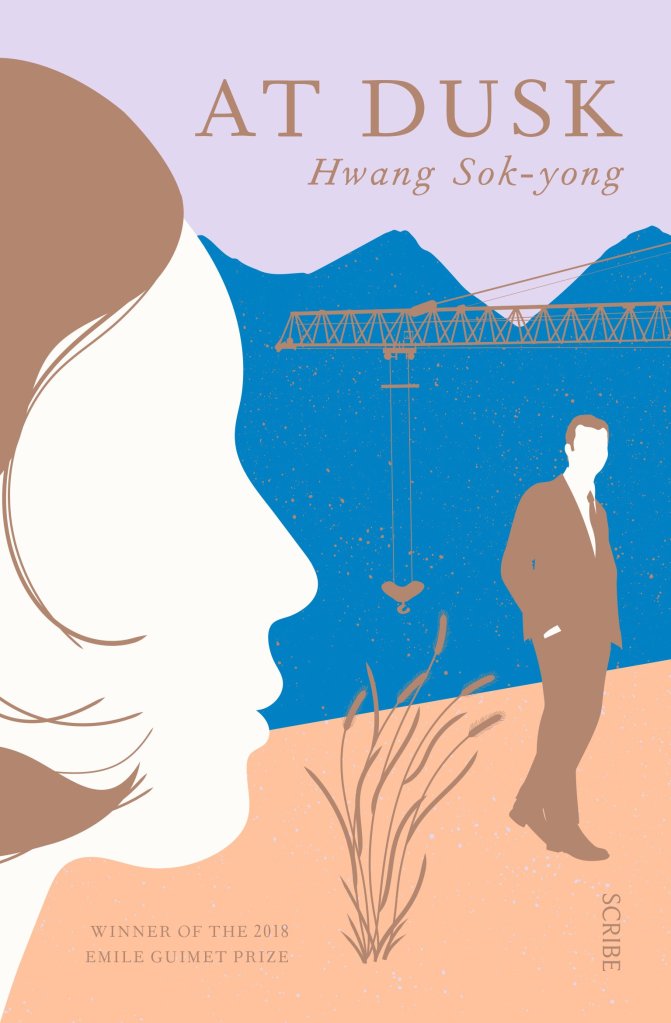
In recent years, the prevailing theoretical trends within literary studies have consistently undersold the value and world-making capacities of humanities scholarship. Rather than study the forms through which literature builds and models social relations, critics have been enthralled to a ‘politics of demolition’, celebrating the undoing of ‘formedness’ and the destabilisation and dismantling of social structures.1 Or, this is at least the central claim of Anna Kornbluh’s The Order of Forms: Realism, Formalism, and Social Space, a work of theory which expands outward from the nineteenth century realist novel to question the political possibilities of literary criticism in the twenty-first century. One of Kornbluh’s primary targets is an unreflective orthodoxy that insists form is axiomatically opposed to and suppresses life, a current of thought she refers to as ‘anarcho-vitalism’. Encompassing thinkers like Michel Foucault, Giorgio Agamben, Michael Hardt and Antonio Negri, anarcho-vitalism asserts that form is irredeemably inscribed within the history of domination: politically, by the sovereign, and economically, by capital. Guided by the attitude that ‘life springs forth without form and thrives in form’s absence’, anarcho-vitalism praises texts which emancipate themselves from form and surrender themselves to a joyous formlessness.2 Yet in doing so, such theorist ignore the extent to which individual existence is impossible without its prior inclusion within collective social life: as Kornbluh glosses, for Marx, ‘being is not tragically ensnared in organisations; being is organisation’.3 Like Frédéric Lordon’s Imperium, The Order of Forms belongs to an emerging body of critical theory which questions the assumptions of horizontalism and challenges its aversion to imagining the essential but ungrounded necessity of big organisational forms, such as the state, but also the party.4
Whereas anarcho-vitalism offers a delirious refusal of form, Kornbluh presses the case for a ‘political formalism’ which ‘affirms the orders made by form and the forms made by order’.5 Political formalism studies ‘how to compose and to direct – rather than ceaselessly oppose – form, formalisation, and forms of sociability’.6 This emphasis on making spaces, constituting social relations, and building worlds more ‘justly’, puts Kornbluh’s work at odds with much contemporary Marxist literary criticism, which remains captured by theories of representation.7 As Kornbluh sketches, cultural form is presented as alternating between the ‘paragon of ideology’ – the imaginary resolution of real contradictions – and the ‘paragon of artistic truth-telling’ – the documentary uncovering of society’s unpalatable enabling conditions.8 As with postcritique and the digital humanities, such methodologies reduce literature to the status of information which needs to be quantified or contextualised, ‘correlating work to cause, word to referent’.9 In a cutting turn of phrase, Kornbluh suggests these practices have consigned their analysis ‘to audits of what certain forms have done’.10 A dialectical theory of literature, on the other hand, engages not only with how novel’s reflect on and produce their historical contexts but is also attentive to the ‘aesthetic thinking’ through which not-yet existing collective social forms are projected, modelled, and instituted.11 Novels should not be constrained by a referential language which indexes their scenes to a pre-existing past but read in terms of how they instantiate and configure new forms of social being. If literature has a telos in The Order of Forms, it is nothing less than Ernst Bloch’s utopian invocation ‘to build “a space adequate for human beings”’.12 In what follows, I would like to consider political formalism through Hwang Sok-yong’s At Dusk and Ricardo Piglia’s The Way Out, two novels which thematically and affectively crystallise a conjuncture Kornbluh elsewhere refers to as ‘too late’ capitalism.13 Of particular interest will be how both novels build alternate forms of collectivity – through literature – but also question the forms of sociability effaced and erased by such infrastructural projects too.
Is There Really Any Humanity in Architecture?
Prizing the ‘arts of social building’, political formalism shares an affinity with architecture, the ‘art of forming spaces’.14 Architecture, Kornbluh writes, is ‘less the imposition of a pattern or order upon extant materials and space’ – the route back to mimesis – and ‘more a radical production of fluctuant realities’.15 Drawing on Derrida, Kornbluh adds that architecture does not so much imitate an object but enacts a rift or ‘rupture in reality’: it outlines a break, an ‘inscription without representation’.16 In this regard, ‘architecture does not represent, depict, denote, or refer – it rather takes place, makes space, composes shape, inaugurates contour; it negates and exceeds what exists’.17 Architecture is thus an abstraction that has real concrete effects: it ‘realises the force of form’ and, in its most utopian moments, has the capacity ‘to protract revolution from the mere seizure of power into the construction and constitution of new spaces’.18 Architecture as a conceptual and historical force informs Hwang Sok-yong’s elegiac At Dusk, a novel that probes architecture’s projected futures but also reckons with its material legacies. Keyed into the rapid economic development of South Korean society, At Dusk complicates the binary of a utopian energetics of building and a destituent politics of demolition. Whilst architecture might not impose patterns on existing social space, the novel suggests that its models nonetheless modify, restructure, and eliminate forms of collective social life discordant with the imperatives of profit. ‘What are buildings made of’, queries Park Minwoo, one of the novel’s narrators, before concluding: ‘in the end, money and power. They alone decide what memories will take shape and survive’.19
At Dusk tells the story of a nation – South Korea – through the projects of urbanisation that have transformed its social spaces and altered its forms of collective life. The novel alternates between two first person narrators: Park Minwoo, a successful architect and influential theorist, and Jung Woohee, a talented but financially precarious writer [who takes on punishing graveyard shifts at a twenty-four-hour convenience store in order to survive]. In this respect, the novel is thus split between a perspective from within the commercial firms which have ridden South Korea’s economic boom, and a perspective from without, from those who have been displaced and are living through the consequences of modernisation. The novel opens with an encounter between its narrators: Jung Woohee approaches Park Minwoo after his public lecture on ‘Urban Design and the Development of Old City Centres’ and gives him the number of Cha Soona, a woman Park Minwoo once loved. Park Minwoo’s narrative is tempered by retrospection as he recounts his flight from the slum world of his childhood to the corporate world of his professional career, a bildungsroman mediated through intellectual striving, fortuitous personal contacts, and ‘cool indifference’.20 Acknowledging the temptation to harmonise individual progress with the developmental unfolding of national history, Minwoo nonetheless cautions against such correlations: ‘of course, we all like to think about our own stories of difficult childhoods and overcoming adversity are the stuff of tragic epics, but they’re never really worth bragging about’.21 Minwoo’s present is itself besieged by scandal: a close friend is in the final stages of cancer, another faces charges of political corruption, and the massive ‘Asia World’ project his firm has been involved with is exposed as a scam for fraudulently siphoning off capital.22 When Cha Soona writes to him that they have entered the autumn of their lives, the ‘yellowing’ hues of the world resonates with Minwoo personally but also perhaps conjuncturally, as the national economy enters an era of stagnation, declining opportunities, and political predation.23
A preoccupation with history, Kornbluh counters, has hindered accounts of ‘literature’s ontological propensity for futurity’: ‘literature makes in language something more than exists; it models futures possible’.24 At Dusk questions whether the futures modelled by architecture do not also involve the cancellation of alternative social arrangements and the erasure of their memories. Drawing on Bloch’s utopian formulation, Kim Kiyoung queries whether Minwoo has constructed a world adequate for human beings: ‘you say buildings are made of space, time, and humanity? Is there really any humanity in architecture? If there were, you’d have to regret what you did. You and the others at Hyeonsan need to think on your sins’.25 An idealist who is pitied and ridiculed by the architectural milieu in which Minwoo moves, Kiyoung theorizes a malaise affecting South Korea’s derivative ‘pseudo-modernity’:
Our generation poured its energy into redevelopment of slums and the creation of concrete mountains covered in boxlike apartments … We drive our neighbours into a space of distorted desire. Architecture is not the destruction of memory, it is the delicate restructuring of people’s lives on top of a sketch of those memories.26
Memory, its folds, habits, and affects, structures the way At Dusk conceptualizes the futurity of architecture, whose ‘futures possible’ it insists are riven by class antagonism: ‘my memories were different from those of the people who lived there’, Minwoo reflects, ‘my job had been to shove their memories together into one big pile, sweep them away and obliterate them’.27 Employed as a creative, Minwoo imagines this dispossession and incapacitation of different modes of relation in the abstract, maintaining a distance from the demolition crews and goon squads who violently clear the ground so it can be seized by form.
This concern with the relationship between architecture and the restructuring of memory would appear to set At Dusk’s ‘aesthetic thinking’ apart from the future-minded projects endorsed by The Order of Forms. Like Kornbluh, At Dusk censures the idealisation of formlessness, insisting that the concerted dismantling of structural forms and relations contributes to a social war against the working class – a body of workers largely absent from the novel’s compositional present. Formlessness also plagues Minwoo’s personal life, which is in disarray: isolated at work and estranged from his US based family, his ‘only pleasure is poring over online maps for new plots of land and imagining the kind of house I would build. But I have no family to live in that house with’.28 The impulse to build, the novel suggests, needs to be supported by the memory that an individual or collective body has the power to build in the first place. ‘Memory’, Frédéric Lordon writes, ‘is a bodily inscription’: it traces practices, habits, and affects onto bodies and groups, forming what Spinoza calls the ‘ingenium’.29 For Lordon, what a political body can do ‘depends on the configuration of its ingenium’ – on its folded memories of practices, habits, and behaviours.30 The social relations that could be organized and remodelled by Park Minwoo remain illusionary, phantom figures haunting the edges of the day because he has forgotten how to act. At Dusk concludes with Minwoo returning to Moon Hollow, although the slum where he grew up has not been spared the pressures of urbanisation and has been turned into a private enclave or ‘fortress’.31 The world once shared by Minwoo and Cha Soona has bifurcated, and whilst Minwoo ‘managed to find comfort’ during the dictatorship, many from the community to which belonged were cleansed: their desires and dreams erased, their bodies and minds broken in re-education camps.32 With the markings and textures of the past eliminated, Minwoo is left disoriented ‘like a man who’d lost his way’.33 What the novel perhaps instantiates is that having habituated a cynical distance from the ‘world and people’, the individuals Kornbluh envisages being collectively organized, need themselves to be restructured from the psychic architectures of defeat.34
Jung Woohee does not necessarily provide a counterbalance to this narrative of defeat. Unable to align a passion for writing with the editorial constraints of the commercial publishing industry, Woohee leaves the sector and instead supports her artistic ambitions through working a series of low-paid, casual service jobs. Woohee is introduced to Cha Soona by Kim Minwoo, a former colleague at a pizza joint who once organized a demonstration against Woohee’s mistreatment by management and quit in solidarity with her. Woohee and Minwoo belong to a generation of Korean workers for whom formal employment has lost its myth of self-advancement; however, as Minwoo observes, at least Woohee has the theatre, leaving him to question ‘what am I working for’.35 For Minwoo, there is no future just a perpetual present of exploitation and alienation: ‘I’m not like you’, he tells Woohee,
I don’t have ambitions. I think I’m just doing one thing after another, at random, trying to convince myself that there really are people like me in this world. Everyone else lives for today whilst gauging what will happen tomorrow, but I’ve spent nearly a decade constantly on the move, my feet barely touching the ground.36
Working for an eviction service company, Minwoo is surprised to discover that his contemporaries still imagine a future different from the present, even if that ‘dream’ is to rob a racetrack.37 Affected by a powerful sense of disposability, Minwoo identifies with the drone bee, expelled from the hive and, in doing so, eventually finds people like him, on a suicide pact forum and with whom he ends his life. Kim Minwoo is the other of Park Minwoo: a member of a demolition crew, he embodies the force that enables Park Minwoo’s architectural forms to take hold, but is also condemned to an episodic rather than progressive temporality. At the same time, Kim Minwoo is equally a copy: named after Park Minwoo by his mother, Cha Soona, who dismisses Woohee’s questions about paternity as a slide into the genre of ‘soap opera’.38
Jung Woohee and Park Minwoo are brought into relation through a non-sensationalist genre of writing, that of biography. After Cha Soona’s death, Woohee discovers that she has been working on a memoir, a project Woohee takes over and supplies with artistic form. Deciding that the revised manuscript’s ‘first reader’ should be Park Minwoo, Woohee emails him extracts, but does so by assuming Cha Soona’s affective identity.39 Woohee uses the textual remainder of Cha Soona’s life to fabricate a second, artificial self, a character whose thoughts she composes and actions she directs, a voice which challenges Minwoo with a divergent reading of their respective flights out of Moon Hollow. Like the account of architecture offered by Kim Kiyoung, literature is a social form which has the capacity to structure the relationship between personal memory and its inscription within collective settings and institutions. An inscription without reference, Woohee arranges a meeting with Minwoo but ultimately stands him up: ‘He is facing his past, but his past is my present … I might have to be Cha Soona for awhile longer. It makes my life bearable, and there’s still more story to be told. Some of it is my story, and some of it is Cha Soona’s unfinished story’.40 Literature, for Woohee, both capaciously synthesises different memories, affects, and stories into a relational whole but is also a form of construction, one which enacts a rift with the intolerable pressures of the present and becomes a space through which alternative futures can be imagined and built.
1 Anna Kornbluh, The Order of Forms: Realism, Formalism, and Social Space (Chicago, IL and London: The University of Chicago Press, 2019), 3.
2 Kornbluh, The Order of Forms, 2.
3 Ibid., 19. [Emphasis in original].
4 Kornbluh approvingly cites Jodie Dean’s Crowds and Party and Fredric Jameson’s An American Utopia as texts which reckon with the question of organisation. Lordon is similarly critical of anarchist tendencies within social movements and the insistence that all hierarchies belong to the realm of domination; however, unlike Kornbluh, Lordon retains the Spinozist concept of the multitude, arguing that a form of verticality – ‘imperium’ – ascends upward from the multitude, that the self-affecting power of a group always produces a common affect that exceeds the group, and which contains – temporarily – its divergent affects. Frédéric Lordon, Imperium: Structures and Affects of Political Bodies, trans. Andy Bliss (London and New York: Verso, 2022).
5 Kornbluh, Order of Forms, 4.
6 Ibid., 4.
7 Ibid., 4. In many ways, The Order of Forms is an intervention within Marxist literary studies itself.
8 Ibid., 46.
9 Ibid., 16.
10 Ibid., 165. Full disclosure: much of my research, writing, and approach to criticism, would fall under the category of ‘auditing’ literary form that Kornbluh despairs of.
11 Ibid., 6.
12 Ibid., 5.
13 See Kornbluh’s forthcoming book Immediacy; Or, The Style of Too Late Capitalism. The Salvage Collective make use of ‘too late’ capitalism in The Tragedy of the Worker: Towards the Proletarocene (London and New York: Verso, 2021).
14 Kornbluh, Order of Forms, 33, 38.
15 Ibid., 41.
16 Ibid., 41.
17 Ibid., 42.
18 Ibid., 42.
19 Hwang Sok-yong, At Dusk, trans. Sora Kim-Russell (London: Scribe, 2018), 10.
20 Sok-yong, At Dusk, 108. As a student, Minwoo ‘sympathised with those who were fighting social injustices, but at the same time, by having the fortitude to just buckle down and get through it, I was able to forgive myself for not getting involved. Over time, this turned into a kind of habitual resignation, and it became second nature for me to regard everything around me with an air of cool indifference’, At Dusk, 107-108.
21 Ibid., 7.
22 Projected to be an industrial centre and commercial hub for the creation of cultural content, Asia World is marketed as an opportunity to capture and capitalise the global appetite for the ‘Korean Wave’, an amalgam, Minwoo remarks, of ‘culture and management’. At Dusk, 87-90. The model, in this instance, is a vehicle for conning investors, projecting a fictitious future.
23 Ibid., 162. For further reflections on the autumn of economic systems, see Giovanni Arrighi, The Long Twentieth Century (London and New York: Verso, 2010). Joshua Clover makes use of this periodisation in the essay, ‘Autumn of the System: Poetry and Finance Capital’, Journal of Narrative Theory, 41.1 (Spring 2011) 34-52.
24 Kornbluh, Order of Forms, 32.
25 At Dusk, 9. An old friend of Minwoo’s, Kim Kiyoung is in the final stages of cancer. Kiyoung’s work is subject to a retrospective exhibition and is positioned as advocating an approach that combines, rather than obliterates, tradition with modernity.
26 Ibid., 92.
27 Ibid, 172-173.
28 Ibid., 188.
29 Lordon, Imperium, 107. [Emphasis in original]
30 Ibid., 111.
31 At Dusk, 182. In doing so, it has expelled the informal groups and communities that once ran the area.
32 Ibid., 139. As Minwoo elaborates, ‘We needed the props and people that we’d made together to pacify us endlessly, to tell us that we’d made the right choice in the end’, At Dusk, 138-139.
33 Ibid., 188.
34 Ibid., 10.
35 Ibid., 117. [Emphasis in original] .
36 Ibid., 117.
37 Ibid., 120.
38 Ibid., 177.
39 Ibid., 181.
40 Ibid., 183.
 Thomas Travers